ラベル 川を読む の投稿を表示しています。 すべての投稿を表示

12/13/2018

Lakes: Learning to Read Again

P 2018 12 13 8 35 10

Lakes: Learning to Read Again  By: Skip Morris

Reflecting 1300 mnryno
Sunrise reflection at Sprague Lake | photo by mnryno


Question: I am so used to fishing for trout in rivers and streams, and I’ve figured out where they hide. . . but I am perplexed when it comes to finding trout in Lakes. How do I find trout hidden in a body of lake water, when everywhere I look, it all looks the same? Help!   —Christine P
質問:ボクは川へ鱒釣りに行っている。そして魚が何処に隠れているか知っている。でも、湖で鱒釣りをするときには困ってしまう。湖でどうしたら隠れている鱒を見つけることができますか?どこを見ても、同じように見える。助けてください!

Answer: Help, Christine, is here. I’ve fished a heap of trout lakes over several decades, have even written a book on the subject (with trout-lake wizard Brian Chan: Morris & Chan on Fly Fishing Trout Lakes)—I’ll guide you to those pesky, elusive trout you seek.

回答:助けて、クリスティーン。 ボクは数十年間、たくさんの鱒のいる湖で釣りをしてきて、本も出版してきた。君が求めている、これらの厄介で、逃げられてしまう鱒に案内しよう。

For starters, you’re right: reading lakes is daunting if you’re new to it, and perhaps even more daunting if you’re new to it but are used to reading streams. Reading streams is really about reading currents—take away all the currents and what you have left is an intimidated stream angler, a deflated soul with no hope. But that’s not you, Christine. You have oodles of hope. Oodles.

You just need to find, in your lakes, the places where trout congregate, these places: shoals, drop-offs, points, bays, the mouths of feeder streams, and springs. Trout can go wherever they please in a lake, of course, but those are the main places they prefer.

まずはじめに、君は正しい。君が初心者なら、湖を読むことは気をひるませる。もし、君がよく川を読んでいて、湖については初心者なら、おそらくもっと気を怯ませるだろう。川を読むということは、実際は流れを読むということだ。すべての流れを取り去れ。残ったモノは自信を無くした一人の釣人だ。希望のないガッカリした気持ち。でも、それは君ではないよ。クリスティーン。君は希望に満ちあふれているのだ。いっぱいに。

Learning to Read 1 1200

A desert trout lake. But any lake—be it alpine, desert, low-elevation—is a stream-angler’s nightmare: no currents to read | photo by Carol Ann Morris
Definitions are in order. A shoal is a small to big flat spot on a lake’s bed; deepening slowly as it extends out from shore. A drop-off is where, at its outer rim, a shoal turns sharply down, as shoals often do. A point is just a finger of land extending out into a lake. A bay is any sort of indentation along a lake’s shoreline, from too small for a boat to enter to, well, big. A feeder stream can be river or creek; in either case it provides oxygen, cold water, and sometimes hatching insects. A spring in a lake is like a spring that emerges from land, except submerged, water seeping or bubbling up from underground (or, rather “underlake,” which I now declare a real word meaning “under the bed of a lake”).

砂漠の鱒の湖。山岳、砂漠、低地にある湖は川の釣人にとって悪夢である。読むべき流れがない。
用語の定義はできている。shoal(浅瀬)とは湖底の浅く、広い平らなスポットです。湖岸から延びながら、ゆっくり深くなっている。drop-off(急峻)

Of all these, the shoal is the trout’s and trout fisher’s Top Pick—shoals are exposed to lots of light to grow lots of bugs and such that feed lots of trout. Trout understand this—so if they aren’t over a shoal, feeding, they’re probably thinking about feeding over a shoal. That’s what makes shoals so good.

Sometimes when they’re thinking about feeding over a shoal but, because the shoal is quiet, aren’t, they’re instead hanging just past the lip of the drop-off, waiting for the shoal to pick up. That’s what makes drop-offs good.

Next question (I know you didn’t ask this one, Christine, but it logically follows): How do I find shoals and drop-offs and the other trout-lake lies? Easy enough—bays and points and feeder streams are out in plain sight, just look.

Learning to Read 2 1200

In spring and fall, when a lake’s shallows are cold and hold ample oxygen, trout, even big rout, may go shallow | photo by Carol Ann Morris


The underwater stuff’s another matter. In a really clear lake you may actually be able see shoals and drop-offs, and identify springs as patches of clear sand from which bubbles rise. But most lakes aren’t all that clear. (Some of the richest grow a lot of algae that can bloom into a truly opaque layer of something like fine lawn trimmings.) How do you find underwater features when you can’t see them? You can inspect the shoreline—how it angles above the water probably about matches how it angles below. Therefore a slow, wide slope entering the water probably extends out as a shoal. You can watch other anglers, if they’re around, and see where they catch fish. You can dig up some info at the local fly shop and on-line, perhaps even find a topographical map of the lake’s bed on-line or in a fishing guidebook.

Or you can invest in a “fish-finder,” a sonar device whose screen displays symbols representing bottom contour, depth, weed beds and boulders and mud flats, and. . .fish. Yes: fish-finders find fish. There they are, Christine, on that screen and straight down below your feet—fish! Since you’ve no river currents to read on lakes, fish finder: invaluable.

And that’s really the thing, isn’t it? Lakes hide their trout and most of their features that attract trout beneath a blank face. By we fly fishers are a crafty and determined bunch; we’ve figured out how see past that poker face and find a lake’s trout. It’s been a collective effort. So, speaking on my own behalf and (with absolutely no authority to do so) on the behalf of all the trout-lake enthusiasts and pioneers, of today and before, who got us to this point: Welcome to trout lakes, Christine! Now, armed with all your oodles, go find a shoal and hook some trout.

11/10/2018

READING THE WATER1,2,3 &4


■READING THE WATER, PART ONE, INTRODUCTION.(川を読む。序論)

1458518318248

No, this blog post is not about a magical river flowing from the headwaters of the Unicorn Mountains, and if you learn it’s secret language, you could read a story about a magical voyage long ago; rather, it is about knowing where fish can be located within a stream based on observable hydrological and structural characteristics.

  このブログはUnicorn Mountainから流れ出している不思議な川について投稿しているわけではない。もし君がそれは秘密の言葉を学んでいるなら、昔の魔法の航海(magical voyage)の物語を読めるでしょう。この投稿は、むしろ観察できる水文(水の循環、移動)とその地形上の特徴に基づいて「川の中のどこに魚がいるか」を知ろうと言うものです。

As a child learning to fly fish, I was always told that being able to “read the water” is an essential skill for an angler's success. At the very least, understanding the fluid dynamics and structural characteristics of a stream can lend the angler the ability to find fish within a given location. 

  フライフィッシングを練習している子供のように「川を読む」能力が釣りの成功に不可欠な技術だと、ボクは常々話している。少なくとも、川の流れの流体力学とその地形上の特徴を理解することが、川辺で魚を見つける能力を釣り人にもたらすのだ。

From the age of ten onward, I dedicated myself to learning about where fish like to dwell within the dynamic world of moving water. I recall sitting in the passenger seat on long drives into the mountains looking at the streams along the road. “Look at that spot; that ought to be a good spot to fish,” I would say, when I identified what looked like a fishy looking fluvial characteristic. Sometimes, I would beg my parents to stop and let me out so that I could at least make a couple of casts in another fishy looking spot just to see what would happen. I always brought my fly rod with me on family road trips into the mountains with an optimistic hope that a lunch spot would afford me at least a few minutes to practice my fly fishing skills.

  ボクは10代のころから川の流れの動的世界の中で、魚の好む場所について理解することに没頭してきた。山岳地帯へ長距離ドライブで出かけ、道路添いを流れる川を助手席から見ていたことを思い出す。「あそこを見て!釣れそうだよ」魚が居そうな場所を見つけるとそう言ったもんさ。ときどき、両親に車を止めてもらって、「あの釣れそうな場所で、何が起きるか数回キャストしてみたいから降ろして!」と頼んだものさ。家族で山岳地帯へ旅行するときはいつも楽観的に期待しながらフライロッド持って行った。ランチのとき、フライキャスティングの練習を少なくとも2・3分間した。

When I was 42, I left my previous two careers in favor of pursuing my fisheries biology degree. I spent a summer working as a stream surveyor for the United States Forest Service. Because I had so much previous experience being able to locate fish in a stream environment, I was tasked with conducting stream snorkeling surveys, looking for coho and bull trout. I later learned more scientific terms for defining different stream classifications and hydrological features both in school and on the job. I now have a language I can speak for describing fluvial fish habitat.

  42歳になったとき、水産生物学の学位取得に専念するために前の2つの仕事を辞め、夏はアメリカ合衆国森林局の河川調査官として働いた。それまでに河川で魚のいる場所を見つける長い経験があったので、そこではコーホとイワナを探しながら、河川でシュノーケリング調査する仕事に就いた。その後、学校と仕事の両方で、川のいろいろな流れの分類と水理の特徴を定義する科学的用語をたくさん学んだ。

I was scouting new water today while taking a bank side stroll with my wife. As we walked along I mapped out this rather featureless beat I might add to my guiding options. We pressed on hoping to find some water with more definition that would appeal to my fish finding senses. I saw an angler working some completely nondescript water, water that I wouldn’t even string up a rod to fish (see my post about laminar flows). To me, it would be like fishing on the moon. There would likely be fish present in that location, but there is nothing unique about the structure to give one a visual clue as to fish location. I then realized that the angler I observed might not be skilled at reading the water, or his skill set may not be strong enough to confidently fish the water with more defined structure and dynamic currents, like those located just upstream from him.

  今日は、妻と一緒に土手をぶらぶら歩きながら、新しい川を偵察してきた。ボクたちは歩きながら、ガイドのオプションに加えようとしていた平凡な釣り場(beat)より、ここを地図に書き込んだ。魚を見つけ出す能力をアピールできるような表現で、ある水域を調査したいと迫った。私はまったく平凡な流れで釣りをしている人を見かけた。そこは、私が釣りたいとさえ思わなかった流れだった。私には、月で釣りしているように思えた。魚がいそうだったが、そこには釣るための視覚的手がかりになるようなユニークな特徴は何も無かった。それで、私が見た釣り人は「流れを読む」ことに慣れていない、あるいは彼の上流側の流れのように、より明確な渓相の流れを自信を持って釣るのには、彼の技術は十分でない、と思った。

I often see anglers fishing in water I rarely stop to explore. I used to wonder if these people knew something that I didn't, or if they just were not educated enough about reading the water? I know, after having snorkeled in plenty of water like the nondescript boulder flats I see anglers frequently fishing, that the fish are few and far between in those locations. Perhaps they are happy with the occasional fish that they work so very hard to catch?

  ボクが滅多に立ち止まらない川の流れで、ときどき釣人を見掛ける。ボクの知らない何かを、彼らは知っているに違いない、あるいは彼らは川を読めない、と思っていた。ボクは、釣人を見かけた何の変哲も無い幅広い平瀬のような水域をたくさん潜水調査してきている。そのような場所では、魚はごく稀にしかいない、ことを知った。恐らく、彼らは苦労して釣ることで満足なんだろう?

It would take me a hundred pages to describe the preferred trout habitat and the techniques to fish each and every one of them. To ease your pain, I will parse this information for you into smaller chunks you can read in small doses. Over the course of the summer we will define specific hydrological features and how fish utilize them. I will try to include as many videos and illustrations as possible, so that I can steer you out of the barren cobble flats with laminar flow into more exciting water full of fish.

  魚を釣るための技術と鱒が好む場所を書き表すためには、数百ページが必要だ。君の苦しさを和らげ、僅かな努力で読めるように、この情報をかみ砕いてあげよう。夏季コースではある特定の水理学上の特徴を定義し、魚がそれらをどのように利用するかを学ぶ。ボクはできるだけたくさんのビデオとイラストを使う。これで、さざ波ができる小石からなる不毛の平瀬から、魚が一杯いるワクワクする荒瀬へ、君たちを向かわせることができる。

I will use a specific language to describe rivers and streams, not only when I am describing fluvial characteristics but also when I discuss benthic macroinvertebrate distributions within a watershed (yawn). Yes, that will be another day.

  ボクは川とその流れを表すために川の特徴を説明するときだけでなく、分水嶺内の川底の大型無脊椎動物(macroinvertebrate)の分布について論じるときにも、特別な言葉を使います。でも、それはまたの機会に。

Fluvial: Fluvial is a term used in geography and geology to refer to the processes associated with rivers and streams and the deposits and land forms created by them.

  河川の(形):Fluvialは川の流れに関係した過程と川の流れによって作られた堆積物と陸の形を示すために使われる地理学と地質学上の用語です。

Benthic: The benthic zone is the ecological region at the lowest level of a body of water such as an ocean or a lake, including the sediment surface and some sub-surface layers.

  底生(形):底生ゾーンとは、湖や海のようなその本体の底部における生態系のゾーンのことで、堆積物表面と表面下層も含んでいる。

Thalweg: is a line drawn to join the lowest points along the entire length of a stream bed or valley in its downward slope, defining its deepest channel -- often having the deepest, heaviest current.

  谷線(谷みち):下り坂の谷、または川底の全長に沿う最低位の点を繫ぐために引かれる線で、最急な溝を定義し、ときどき最も深く、重い流れになる。

Laminar Flow: In fluid dynamics, laminar flow (or streamline flow) occurs when a fluid flows in parallel layers, with no disruption between the layers. Observed as smooth even current from bank to bank.

  層流:流体学において、層流(流川流)は層間に乱れが無く、平行した層の状態で流体が流れるときに生じる。川岸から川岸へスムーズで平坦な水流として観測される。

Substrate: The composition of the bottom of the stream from sand, silt, clay to stones, cobble and boulders.

  素地:砂、シルト、粘土から石、小石、大石までの川底の構成のこと。

Embeddedness: The degree to which fine sediments surround coarse substrates on the surface of a stream bed is referred to as embeddedness.

  推積:川底の表面において粒度の大きい素地の周辺のキメの細かな沈殿物の度合いをembeddednessと言う。

Riffle: A riffle is a shallow section of a stream or river with rapid current and a surface broken by gravel, rubble or boulders. Riffles are instrumental in the formation of meanders, with deeper pools forming alternately.

  Riffle(早瀬):Riffleとは水流が速く、川底が砂利、小石、大石でできていて、水面が乱れる川の区間です。Rifflesは形成されるより深いプールのことで、一方で曲がり(meanders)形成の助けになっている。

Pool: in hydrology, is a stretch of a river or stream in which the water depth is above average and the water velocity is quite below average. A pool must extend from bank to bank. A side pool does not extend from bank to bank but to the side with faster water defining one side if the pool. A side pool will generally have a current seam and back eddy characteristics. 

  Pool(プール):Poolは水文学では川の直線部分で、水深が平均以上、流速は平均よりかなり低い。プールは川幅一杯に広がっている。

Current Seam: the parallel junction between two distinct current speeds as they slip past each other.

  水流の継ぎ目(潮目):2つの流れが互いにすれ違って動くとき、2つの異なった水流の速度間にできる平行な接合面のこと。

Foam Line: Where bubbles gather in specific patterns along the length of current as defined by that current.

  Foam Line(泡群のライン):その水流で輪郭が形成されるように、泡が流れに沿ってある特定の紋様で集まる場所のこと。

Pocket Water or Pocket Pools: Small bank side pools outside of the Thalweg that are defined by and protected by boulders that cannot be technically defined as a pool.

  Pocket Water(ポケットになった水域):谷線(thalweg)から外れた小さな川岸際のpoolのことで、技術的に1つのpoolとして定義できな。Pocket waterは大きな石で形成されていて、また守られている。

Wetted Width: the width of a body of water as described by the current water level.

  川幅(法面が濡れている部分の幅):水流レベルによって記述される川本体の幅。

Up Next: Current seams and bubble lines. What do they mean?

  Up Next:水流の境界と線状の泡。どう言う意味?

READING THE WATER PT 2. SEAMS AND BUBBLE LINES(川を読む2。境目と線状の泡)

There are a few basic visual clues one can learn to observe about streams in order to narrow the window of where fish are likely holding, especially on big rivers where fish could be anywhere; especially if you don't know how to dissect large parcels of water into smaller subsections. One of the most obvious and often overlooked indicators of likely fish locations are the bubble lines or bubble zones. Bubble lines occur where the current gathers together usually as a result of some instream structure funneling the surface bubbles into predictable locations which also funnels food into a small area making feeding easier for fish, thus expending fewer calories in an effort to feed. Instead of having to swim all over the place looking for food, a fish can hold in a preferred spot where the food is funneled directly to them. Current seams can also define the location of a bubble line or at least prove a location that can also funnel food into a narrow band. Though typically a bubble line is caused by underwater structure. Structure that gives fish a safe location in which to hold and feed. Usually, you will find current seams and bubble lines very near each other,

  魚がどこにでも居そうな大きな川では、その範囲を狭めるために、特に君が水域がどのように小さく分割しているか知らないなら、川について観察するための視覚的手がかりが2・3つある。魚の居そうな場所を示す明確であるが見落としがちな指標の1つはBubble lines(線状の泡)か、水泡エリアだ。それは通常、複数の流れが一緒になったときに、水面の泡を予測できる場所へと巻き込む川の内部構造の結果である。また、それはエサを魚が簡単に採餌できる狭いエリアに巻き込んでいる。そこでは、魚は採餌のためのエネルギーをほとんど使っていない。魚はエサを探すためにあっちこっち泳ぐ代わりに、エサが直接じょうご状に集まってくるお気に入りの場所に定位しているのだ。流れの境目(シーム)はまた泡の線(Bubble line)の位置を明らかにし、または少なくとも狭い範囲にエサを集める位置をハッキリ示している。一般に線状の泡は水中の構造によって生じる。その構造は魚を定位させ、安全に採餌できる場所となる。通常、流れの潮目と線状の泡はお互いの近くで見つけることができるでしょう。

In the images below, I illustrate some of the most obvious instances of water that contains bubble lines, current seams and structure. If you stumble upon a small section of water that contains all three, take a moment to analyze what you are looking at. Chances are there may be a feeding fish.

  下の写真は、線状の泡、流れの境目、川底を含んだ川の流れの最も分かりやすい例だ。もし君が3つすべてを含む小さな水域に出くわしたなら、それを分析するために少し時間を取りなさい。採餌している魚がいるかもしれない。

In figure 1. You can see several prime structures you should look for when searching streams for likely trout holding water. There is an obvious current seam defining the slow and fast water, obvious underwater structure fish can use to hide near and a bubble line funneling food into the best possible holding spot. Can you identify where the fish should be in this picture ?

  図1では、君が探すべき、鱒が定位していそうな川の基本川底を見ることができる。そこには速い流れと遅い流れをハッキリさせる明らなか水流の境目、魚がすぐ隠れることができるハッキリした水の中の川底、そしてベストな魚の定位場所へとエサを引き込む線状の泡が存在している。君はこの写真のどこに魚が居るか、分かるかい?
1459631760061
Figure 1. Typical Grade A trout structure. It has cover from above, A strong bubble line funneling food near structure with a quick escape route next heavy fast current. 

  図1 グレードAの鱒が定位する典型的川底。上からカバーがあり、隣の速い流れに素早く避難できる川底、その近くにはエサを巻き込む強い線状の泡がある。

1459631969891

Figure 2. Current structure defined between current seams and foam lines or bubble zone.

図2 潮目と線状の泡の境目間の流れの構造

1459632471483
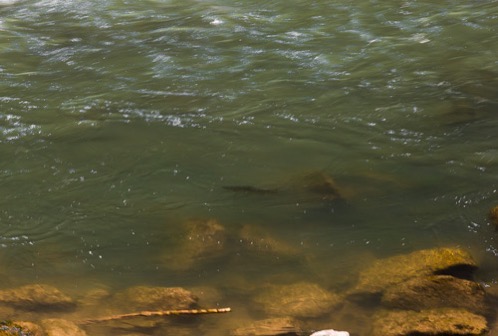
Figure 3. A trout revealing its exact location

図3 居場所を見せる鱒

■READING THE WATER PT3. DECIPHERING LAMINAR FLOWS(川を読み3.層流を読み取る)

Not every river you fish will feature endless arrays of perfect pockets, pools, seams and structure in which to easily locate fish. Sometimes, we have to find fish in water that has less distinct characteristics. Rather than waste time blindly casting to empty water, possibly putting down fish with our efforts, stop and take time to observe the surface characteristics of the flow.

  すべての川というわけでないが、たくさんの完璧なポケット、プール、潮目、そして川底が重要であり、そこでは簡単に魚を見つけることができる。ときどき、特徴が不明瞭な川で魚を見つけなければならない場合がある。魚の居ない川に向かってキャストして時間を無駄に消費するよりも、できるだけじっと魚を見下しながら、立ち止まって川の流れの水面の特徴を観測することに時間を使え。

Laminar flow can be the most enigmatic water to decipher. It is water that flows at an even speed from top to bottom bank to bank. I normally walk by water that exhibits no obvious structure in which to target my effort. Smooth even currents from bank to bank merely bumping over the rubble is akin to fishing on the moon. I know fish are present, often seeing rises out in the nondescript waterscape, but fishing this water requires more time and effort than casting to fish around obvious structure. 

  層流(Laminar)は川の流れを読むための、最も謎めいた(enigmatic)水域だ。それは、川岸沿いの流れの表層から川底まで、一定の速度で流れている水域のことだ。普通、ボクは川底がまったく不鮮明な水域近くまで歩き、そこで頑張る。泡が川底の小石を越えて揺れながら、岸幅一杯に広がったスムーズで均一な流れは、月での釣りと同じだ(釣れそうもない?)。特徴の無い水辺で魚がライズするのを見ながら、ボクは魚がいることは分かる。でも、そこで釣るためには、川底がハッキリした場所の周辺でキャストするよりも、もっと時間と努力を必要とする。

If you do chance upon a feeding fish in a section of river that is laminar in structure, spend some time observing where that fish is located. Even without the telltale signs of current seams, the location of drifting insects and fish are not left to chance. There is a structure at work that the fish use to thier advantage.

  もし君が層流の水域で採餌する魚に賭けてみるのなら、魚がどこにいるか観察することに時間を割け。流れの境目が分かるサインがなくても、水面を漂流する虫の位置と魚が、チャンスをくれる。そこは魚に有利な川底をしているのだ。

Fish will use whatever structure is available to them within the limited confines of a river. Sometimes we must look at less than obvious structures in the laminar sections of water. When looking at laminar flow, observe the structure of the river bottom and speed of the current. If the substrate consists of only sand, silt or very small cobble, with a flow that is walking speed or faster, you are better served moving along in search of something else. However, if you find laminar walking speed flow with a substrate that consists of bowling ball sized cobble you are in luck. You have found water that may contain fish. Small boulders create micro vortices that can hold a fish in the current, so the fish spends very little effort in maintaining its position. Deschutes River steelheaders know this when they fish those classic named mile long runs.

  魚は、川のある特定の範囲で利用できる「川底」なら何でも使っている。ときどき、層流区間でハッキリしない川底にしっかり目を向けなければならない。層流を調べるとき、川底の構造と水流の速度を観察しなさい。もし、川底が砂、小石、泥のみから成っていて、流速が歩行速度程度か、それより少し速いなら他を探した方が良いだろう。でも、もしボーリング玉大の石からなる川底で、歩行者速度の層流を見つけたなら、君は幸運だ。魚のいる水域を見つけたことになる。小型の丸石は、魚が水流でその身を定位できる小さな渦流を作る。それで魚は簡単に自分の位置を維持可能になる。Deschutes川のスティールヘッダーは、彼らが古典的な名前の「マイルの流れ」で釣るとき、このことを知っている。

1475939228502
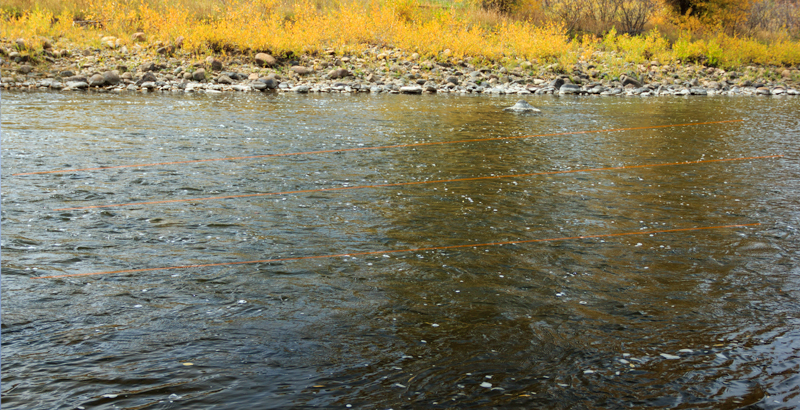
Figure 1. Laminar Flow(層流)

Before you wade into the river and start casting with the usual routine of starting in close working your way out in a clockwork shotgun fashion, take time to look at the surface of the water and try and find the “lanes” that do exist. Lanes are the micro seams that slip past each other funneling everything that drifts downstream into narrow bands. The best way to find the lanes is to find the bubbles. Are the bubbles accumulating in a concentrated area? If so you have found your lane. It may take some time to train your eye to look for a higher concentration of bubbles gathering in an inch wide seam amidst an even dispersion of bubbles, but when you do, you have found your area of concentrated effort. Fish will be located within close proximity of these micro seams in order to easily slip away from thier vortex and inspect a likely morsel. 

  川をウェ−ディングし、何時ものように自分のやり方で時計回りにキャストを始める前に、水面を調べる時間を取って、そのLanes(レーン)を見つけなさい。レーンは微細な潮目で、下流の狭い範囲へ漂流物すべて通過させる。レーンを見つけるための最良の方法は、泡を見つけることです。あるエリアに泡が集積しているか?もしそうなら、君は自分のレーンを見つけていることになる。散らばった泡の中で1インチ幅の潮目に集まってくる高濃度の泡を見つけるためには、目を訓練する時間が必要だ。でも君がそのようにしたときは、もう集中して練習する場所を見つけているのだ。魚は渦流からこっそり離れて、エサになるものを調べるために、それらの微細な潮目の近くに潜んでいるであろう。

1475939442943
Figure 2. Lanes are revealed as white lines caused by the accumulation of bubbles in concentrated micro seams.
(密集した境目に蓄積した泡によって、白線状にレーンが現れている。)

1475955566823
Figure 3. Orange lines indicate the location of the lanes within a Laminar flow profile.

(図3 オレンジ色の線は層流内のレーンの位置を示している)


In the images above, I have used the tools of photography to illustrate where micro seams actually occur. In figure 1, we see a general random dispersion of bubbles on the surface in a section of laminar flow over bowling ball sized substrate. In figure 2, I exposed the image longer to blur the lines and now you can see the micro lanes as faint white stripes, so that you will know better where to concentrate your efforts.

  上の写真では実際に微細な境目がどこに生じるかを示するために、写真ツールを使っている。図1では、ボウリング玉サイズの川底の上の層流の区間に、水面に乱雑な泡の消散が見える。図2では、線状の泡をぼかすために少し長く露光した。それで微かな白のストライプで微細なレーンを見ることができる。釣りのとき、どこを攻めれば良いかがより明確になっている。

1475955826880
Figure 4. Can you see it now?(図4 君は分かるかい?)


■FISHING THE EDGES - READING THE WATER PT IV(川を読む4。縁を釣る)

When I guide with guests who wish to learn more about fly fishing or to sharpen their skills, I teach them two mantras: fish the edges & the foam is home. Finding fish is the most important part in fishing. However, you would be amazed at how many times I show up to a crowded beat on a river and see people ignoring the prime water, and instead, fishing water because they are observing an occasional fish feeding here and there. They are fishing with their eyes and not their river reading skills. Knowing how to find hidden fish in heavy water can yield big results.

  「フライフィッシングを学びたい」、「もっとうまくなりたい」と思っている客をガイドするとき、ボクは2つの呪文(マントラ)を教える。「縁(Edges)を釣れ」と「泡沫(Foam)はホームだ」ということだ。魚を見つけることは、釣りで最も重要なことだ。でも、ボクが混み合った釣場(beat)に出かけて、一級の釣り場を無視し、代わりに、ときどき魚が採餌するのを目撃した場所で人々が釣っているのを目撃すると聞けば、君はその回数に驚くことだろう。彼らは自分の目を信じて釣りをしているのであって「川を読む」知識を信用していない。流れの速い川で潜んでいる魚を見つける方法を知ることが、釣りの成功に繋がる。

FullSizeRender+4

Recently, I was on a popular beat of the Yampa River in downtown Steamboat Springs. I have a favorite spot that conceals a lot of very nice fish. My river log will tell you my success on the Yampa and much of it can be correlated to this particular spot among just a handful. The froggy pool above me had two anglers swinging patterns to no avail and the pool below me was occupied, as it usually is on a daily basis. Yet, right smack in the middle of the river lays my favorite spot hidden in plain sight.  I wade across to begin my approach while thinking to myself that surely, someone had to have pounded this spot and my efforts might be to no avail. I made my second cast and hooked and landed a nice 18" brown. I hooked and landed a few more fish and broke off a large gator rolling rainbow. I know that this spot does get fished as I have removed many flies that have broken off in the snouts of fish here. Perhaps these fish had been hooked elsewhere and sought refuge in this rarely fished spot?

  最近、Streamboat  SpringsのYampa川(Colodaro州)の人気の釣場へ行ってきた。いいサイズの魚がたくさんいる秘密の場所を知っている。ボクの釣り記録から、君はYampa川の釣り成功体験を学べる。その大半は特定の釣場に関係している。ボクの上流側の蛙の多いプールに、二人の釣れていない釣人がいて、下流側のプールには毎日先客がいた。川の中流は、まだ小型の船がよく見える状態だった。きっと誰かがこのスポットを叩いていて、釣れないだろうと思いながら、ウェーディングでスポットに接近し始めた。二回目のキャストでヒットさせた。18インチのブラウン・トラウトだった。更に数匹を追加し、体をローリングされて大型のニジマスを取り逃がした。魚の鼻先で取り逃がしたたくさんのフライを取り除きながら、このスポットで釣れることは分かっている。恐らく、これらの魚は他の場所でも釣られていて、この滅多に釣られないスポットで、魚は隠れ場所を探してきたのだろう。

What makes that particular spot on the Yampa and other similar spots unique is that it contains well defined edges and foam lines. An edge is where differing current speeds slip past each other and are often bordered on one or both sides by heavy water. Steelheading anglers know this as a current seam and that is where steelhead like to hold or travel along. Edges can also be defined by channel morphology such as gravel bars and drop offs or converging currents. In short, it gives fish structure both above and below the water surface.

  Yampa川のある特別なスポットと他の場所の似たスポットをユニークなものにしているものは、明瞭な縁と線状の泡がある点だ。「縁」は水流の異なる速度がお互いに通り抜ける場所で、重い流れによって片側か両側に縁ができる。スティールヘッダーはこれを「水流のシーム」と言い、スティールヘッドはここに留まったり、これに沿った遡上を好むことをよく知っている。また縁は、砂利の洲(gravel bars)とDrop offs(川底の落差)、または合流する流れとして、流路形態によって定義されている。要するに、水面の上と下の両方で、魚に地形(隠れ場)を与えることになる。

Fish need three conditions for basic survival. Cover from above, a steady predictable food source drifting within close proximity and respite from the current. Edges usually provide all three of these conditions. If you find edges that contain a bubble line or a foam line you have found an ideal location to probe with a tactical nymph. Bubble lines are a clear indication of a current feature that funnels everything drifting downstream into a reliable path and if one is located near an edge you have eliminated a lot of guesswork. You can read about foam lines here.

  魚は生きていくために基本的に(サバイバル)、3つの条件が必要だ。1)上からのカバー、2)近くを漂う安定して予想できるエサ、そして3)水流に対する休息だ。縁(Edge)はこの3つ条件をすべて与えてくれる。もし、君が線状の泡(bubble line, foam line)がある縁を見つけたのなら、戦術的ニンフを試す理想的な場所を見つけたことになる。線状の泡は水流の特徴を表す明確な指標で、下流へ流れるすべてのモノはその信頼できる経路に収斂する。もし君が縁近にいるのなら、たくさんの当てずっぽうを取り除いてしまっていることになる。ここで、君は線状の泡について読むことができる。

The image below is perhaps one of the best examples of what a very "edgy & foamy" section of river can look like. On the left is a gravel bar forming an edge with a heavy section of current forming the other edge. A foam raft near the top provides cover for fish and the bubble lines gives us a clue that there is a food path for the fish. This pool also provides cover from above and bowling ball sized boulders on the bottom providing a buffer from the current. You can see the size of the boulders middle upper right. I watched two anglers fish this pool before I reached it and I managed to catch a few more fish out of it before calling it a day.

  下の写真は、おそらく、非常にEdgyでFoamyな河川区間の良い例であろう。左岸(上が上流で、上流から下流を眺めた場合の左側。つまり右側)に、他の縁を形成する荒い流れのある縁を形成する砂利の中洲がある。頂上付近の白泡の浮遊物は魚のカバーになり、線状の泡はエサが流れる経路の手がかりになる。このプールには上流にカバー、川底に水流の緩衝となるボーリング玉大の石もある。右の中央部の川底にボルダーサイズの石が見える。そのプールに到着する前に、2人の釣人が釣っているのを見ていて、 一日が終わる前に(before calling it a day)、どうにか数匹釣ることができた。

GRAVEL BARS(砂利の中洲)

IMG 1412

Green areas are the prime spots within the confines of this edges to pay special attention to. Don't forget to fish both sides of a heavy current edge and any pockets whereabouts additional fish might be found.

  緑色のエリアは特別に注意すべき縁の第一級スポットだ。急流の縁と魚が居そうなポケットの両方で釣ることを忘れるな。

IMG 1412 32

HYDRAULIC EDGES(水流の縁)

IMG 1405

This pool is another example of an edge. Here, converging currents create a hydraulic edge thus defining a feeding lane and cover from above. Fish will hold very near the fast water slipping away to intercept anything edible that might be coming down the pipeline. There is a special spot near the top center of this riffle where the fish are protected on both sides from current cover allowing them to move either left or right in search of food. Can you find the sweet spot?

  このプールは別の縁の例である。流れが合流し、採餌レーンと上側からのカバーを明確にする縁を作っている。魚はこの流れに乗って流れてくるどんなエサでも捕食できるように、スーッと流れ去る速い流れ近くに定位している。早瀬の瀬頭の中央近くに特別なスポットがあって、そこでは魚がエサを探しながら左か右に移動するために、流れのカバーによって魚の両側が守られている。君にはその最高のスポットが分かるかい?

IMG 1405 2

It's worth attempting to fish the near side of this current edge however, heavy angling pressure will likely cause the fish to concentrate in the water seeing less pressure. I landed a 21" rainbow and 18" brown rainbow out of the green section of this beat.

  この縁近くで釣りする価値がある。しかし、釣り人達のプレッシャーが、プレッシャーの少ない水域に魚たちを追いやるだろう。ボクはこの緑色のセクションで21インチのニジマスと18インチのブラインと釣り上げた。


FullSizeRender+3

This beautiful bow was pulled from the sweet spot within a hydraulic edge.
Have fun out there looking for those edges both obvious and more subtle.

  この美しい魚体を縁の絶好のスポットから引き出された。ハッキリした縁と微妙な縁の両方を探すことを楽しんでくれ。

9/17/2018

Beyond the Swing

P 2018 08 20 8 34 21
Beyond the Swing
by John Likakis
illustrations by Jonathan Milo
If you want to catch trout with those wet flies in the corner of your fly box, take a few pages from Grandpa's playbook.
Beyondtheswing 1
Figure 1: The straight-out method allows you to get a wet fly into a tight spot, such as a logjam, or around a bend in the stream. As you strip off line in short increments, the fly drifts a bit in the current and then line tension makes the fly describe a mini-swing that fish find irresistible.
Straight-out方法を使うと、流木の塊や小川の曲がりのような狭いスポットへ、ウエットフライを持って行くことができる。フライラインを少し出すと、フライは水流を少し漂い、ラインのテンションでフライを魚が堪らなくなる小さな泳ぎを見せることができる。
ALTHOUGH DAVE HUGHES’S exhaustively titled Wet Flies: Tying and Fishing Soft-Hackles, Winged and Wingless Wets, and Fuzzy Nymphshelped bring on a minor resurgence of the wet fly more than a decade ago, for many fly fishers, these old-school patterns remain something of a mystery. A wet fly is not quite a streamer and definitely not a nymph, so what are you supposed to do with it? To add to the problem, we are constantly reminded that hatch-matching is the ultimate fly-fishing skill, yet many (perhaps most) wet-fly patterns don’t really look like anything you see crawling or swimming in trout streams.
DAVE HUGHESの詳解「Wet Flies」では、ソフトハックル、ウィングあり・なし、ファジーなニンフのタイイングと釣りは数十年前より僅かに復活しているというけど、古典的パターンには何かミステリアスな部分が残っている。ウェットフライはまったくストリーマーでないし、ニンフでもない。それでも、君はそれで釣りたい?更に、マッチザハッチはフライフィッシングで最高の技術で、その上、ほとんどのウェットフライは実際には水中を這ったり、泳いだりする虫に似ていない、ことを思い出させる。
However, I’ll bet that your grandpa knew all about how to fish a wet fly, and he probably took most of his trout while fishing below the surface. Indeed, there was a time when the first thing a fly fisher tied to his gut tippet was a wet fly. And those old-time patterns — such as the Cow Dung, Wet Coachman, and Pale Morning Dun — will still catch plenty of trout if you know how to fish them.
でも、君のおじいさんはウェットフライでどうやって釣るかを知っていて、おそらく、水面下で釣っていたと、僕は断言する。実際に、かつてはフライフィッシャーがフライに最初に結ぶフライはウェットフライである時代があった。Cow Dung, Wet Coachman, Pale Morning Dunのような昔のフライパターンは、君がどのように釣るか分かっているなら、いまでも良く釣れる。
The basic, old-school technique is perfectly recognizable today: Cast across or quartering downstream, and then let the fly swing with the current. That’s the way most fly fishers fish wet flies, and it’s fine, as far as it goes. But too many anglers use wet flies in much the same way that they would fish a streamer. They blind-cast, drift, swing, and retrieve, paying little or no attention to where they’re placing the fly or what it’s drifting past. What these anglers don’t consider is that trout chase streamers because the big morsels seem worth the effort in ways that a little wet fly doesn’t. Few monster browns will charge from behind a rock to intercept a Royal Coachman five feet away.
基本的な伝統技術は今日でもすぐ分かる。対岸にキャストし、水流でフライを泳がす。これが、いままで釣り人がウェットフライでもっとも釣るやり方だ。しかし、あまりにも多くの釣り人が同じ方法で釣っている。フライの落とし位置や既にドリフトした場所にほとんど注意せずに、ブラインド・キャスト、ドリフト、スイング、そしてリトリーブする。これらの釣人が熟慮しない点は、大きな餌は小さなウェットフライにない価値があるように見えるので、鱒たちがストリーマーを追うという点だ。ほとんどの大型ブラウントラウトは5フィート離れてロイヤルコーチマンを喰うために、岩の後ろから襲ってくることはない。
Beyondtheswing 2

Figure 2: To present a wet fly to a fish against the opposite bank, make a quartering downstream cast (A), and then use mends to control the speed of the drift (B). Plan for the line to come tight just as the fly is about to bonk the trout on the nose (e). The rising, "fleeing" action of the fly can trigger a strike.
対岸の魚に対してウェットフライをキャストするために、45度下流にキャストし(A),ドリフトスピードをコントロールするためにメンドせよ(B)。フライが魚の鼻先を打つぐらい近づいたとき、ラインがピーンと張るようせよ(C)。フライのrising, fleeing操作はアタリを誘う。
The key to successfully fishing a wet fly is to put the pattern right in front of the fish. If you know how to read the water and have a reasonable command of casting, you can ensure that your offering drifts past all the prime lies in a stretch of river. You should also alter the action of the fly until you get a response. If a standard swing or dead drift doesn’t draw any strikes, try presenting the fly so that it starts to rise just as it reaches a good lie (a technique known as the Leisenring lift). Making these kinds of adjustments is the difference between fishing a wet fly and really working a wet fly. Start to pay more attention to how your fly looks to fish in specific lies, and you’ll see your catch rate rise sharply.
ウェットフライ成功の秘訣は魚の目の前に、フライをうまく持って行くことだ。もし君が川を読むことができて、思い通りにキャストできるなら、君は川の直線部の魚がいそうな場所をすべて試すことができるだろう。反応を得るまで、フライのアクションも変えるべきです。もし普通のスイングやデッドドリフトがどんなアタリも引き寄せないなら、フライがうまく魚の住みかに届くように竿先を上げ、プレゼンテーションせよ(技術的に、Leisenring liftと言う)。この種の調整をなすことは、釣るウェットフライと実際に動いているウェットフライ間の相違のためである。特定の住みかの魚に対して、フライがどのように見えるかに、もっと注意を払え。そうすれば、釣れる魚の数は急激に上がるだろう。
Straight to the Point
Sometimes, the best presentation is also the easiest. A few years ago, I was fishing a heavily pounded stretch of a famous catch-and-release river in the Northeast. The few bugs coming off the water weren’t enough to attract any trout to the surface, and the nymphs I tried produced nothing. My partner, however, was catching plenty of fish. When we took a break, I pried his secret out of him.
単刀直入に
ときどき、ベストなプレゼンテーションはまた簡単でもある。数年前に、北西部のキャッチアンドリリースの川の重い流れで釣っていた。川から羽化している虫は鱒たちを水面に向けるには十分でなかった。ニンフで試したが反応はなかった。でも、仲間はたくさん釣っていた。休憩したとき、彼からやっと秘密を聞き出した。
He was using a Cow Dung wet fly, but it wasn’t the pattern that was remarkable; it was his technique. He simply fed the fly straight downstream in the current by pulling line off his reel in four-inch strips and letting it slide out the guides. The fly danced its way down the river, and he could guide it right into the best lies by simply moving his rod tip from side to side or tossing small mends left or right (see Figure 1).
彼はCow Dungウエットフライを使っていた。でも、それは特別なものではなかった。彼の技術が違ったのだ。彼は単にフライラインをリールから4インチ(10cm)引き出して、下流にまっすぐ送り出し、ロッドガイドを滑らせていた。フライは下流方向で泳ぎ、彼は穂先をあっちっこちに動かして(または右左に小さくメンドして)、ラインを簡単に魚が潜む場所へ誘導していた(図1)。
He said he had learned this simple technique as a kid, but I’ve since found references to it in fishing books dating back to the turn of the century. This was the preferred way to get a fly into snags or down to fish at the lower ends of pools. It worked then, and it works now. I’ve since found that this “straight out” technique has many applications. Here are a few examples from my own fishing experience.
彼は、子供の頃この簡単な方法を学んだと言ったが、それから前世紀の釣り本の中で、それが参考にされていることを僕は知った。これは沈み木へフライを送り込んだり、プールの浅瀬で釣るために、フライを沈めるのに良い方法だ。当時うまくいき、今日でもちゃんと働く。このstraight out 法はたくさんの応用が利く。ここに私の経験から得たサンプルを挙げる。
I had the good fortune to fish a leased stretch of Tarryall Creek in Colorado a few years back. The water was so clear, you could see fish on the bottom from 50 feet away; problem was, they could see you, too. These trout were extremely spooky; even the gentlest delivery with a tiny fly on 7X tippet would send them scattering.
数年前にコロラド州のTarryall Creekの賃貸区間でイイ釣りをした。水質は非常にクリアで、水深50フィートの魚が見えるほどだった。問題は魚も君が見えると言うことだ。鱒たちは非常に用心深くて、7Xティペットで小さなフライをやさしく送り込んでも、魚を散らしてしまうくらいだった。
After scaring a half dozen bend pools, I decided to try snaking a wet fly around the next bend. I tied on a size 14 Pale Evening Dun wet fly, and started feeding line around the bend with short strips, which caused the fly to drift downstream briefly and then skit upstream an inch or two. I had perhaps 20 feet of line out when I felt a solid tug. A 14-inch brown had broken the ice. On the next two bend pools, I used this straight-out technique to take three more trout.
半ダースほどの川の曲がりの魚を脅かしたのち、私は次の曲がりではウェットフライをユラユラさせようと決めた。#14のPale Evening Dunのウェットフライを結び、ラインを少しずつ引き出して、フライが僅かに下流へドリフトし、1−2インチだけ上流にskitするように、その曲がりへフライを送り込んだ。1つの引きがあったとき、ラインは20フィート出ていた。14インチのブラウンが沈黙を破った。次の2つの曲がりでは、3匹の鱒を釣るために、このstraight-out法を使った。
Beyondtheswing 3
Figure 3: The Leisenring lift allows the angler to make pinpoint presentations — even in a stretch of river with conflicting currents — that mimic an emerging insect (left). The key is to first pinpoint a likely trout lie and then perform the "lift" just a few inches upstream (right).
Leisenring liftは釣り人がピンポイントのプレゼンテーションを可能にする。水流が逆になった流れでも。それは羽化しかけの虫をまねている。
A stream I fished in Connecticut had one very good-looking pool right where it ran under the interstate. The water was too deep to wade, and the banks were far too steep and high to walk along. I’d fished streamers and nymphs through that water countless times and had come up blank, but it looked too good not to hold any fish.
コネチカット州で釣った小川は、州間高速道路下を流れていて、1つの非常に素晴らしいプールがあった。水位はウェーディングには深すぎて、歩くには岸は急で高い位置にある。僕は何度もストリーマとニンフで釣ったことがあるが、何も釣れなかったけど、そこはあまりにすばらしくて、魚をホールドしなかった。
It finally dawned on me one afternoon to try feeding a wet fly down through the pool. My hunch about the water holding trout was correct — I caught a dozen fish out of the pool before I had worked all the way down to the far end. The fish were all small, averaging perhaps six or eight inches. But they were the first fish I’d taken from that water in two years of fishing it.
そのプールにウェットフライを流すことを、ある午後に思い浮かんだ。鱒が潜んでいる流れの予感は正しかった。以前、ズーッと下流のまで試した場所で、魚を12匹ほど釣った。魚はけっこう小さく、6〜8インチほどだった。でも、そこで2年間釣っていて、初めて釣れた魚だった。
The straight-out method also works well for fishing under and around big log dams and blowdowns that back up a sizable pool. Getting a fly anywhere back under the thicket of overhanging branches can result in a strike from some of the biggest specimens in any trout stream. The straight-out technique gives you the best control over the fly to keep it from getting hung up, and lets you muscle a fish straight out of the debris before it can wrap your tippet around a stick.
このstraight-out法はかなり大きいプールを堰き止める大きな流木の塊と倒木の下や周辺を釣るとき、うまく行く。木の枝が水面に覆い被さっていることろで、フライを戻す操作は、どんな鱒川に生息する大物を誘い出す。straight-out法はフライが引っかかることを防ぐベストな方法だ。小枝にティペットを巻き付ける前に、障害物から力ずくで魚を引き出す。
Speed Control
In nearly all wet-fly fishing, maintaining control over the fly’s speed and position is vital. Controlling a wet fly is accomplished almost entirely with the line. You should be able to toss decent mends — either up- or downstream — in your line as needed to get the fly to speed up, slow down, or start swinging at a specific point. Some of these techniques have had fancy names attached to them — Hughes writes about the Crosfield draw, the Leisenring lift, and many more — but they all come down to mending and working the line to control the speed and position of the fly. The Crosfield draw, for example, is nothing more than throwing a downstream mend into your line to increase the line’s belly in the current and so speed the fly up — a good tactic for big, slow pools. You don’t need to know the names of the techniques, but you should know how to control your line to make the fly do what you want where you want it.
スピード・コントロール
ほとんどのウェットフライ・フィッシングではフライのスピードと位置をコントロールし続けることが重要だ。ウェットフライのコントロールはほぼラインで行う。あるポイントでフラウをスピードアップしたり、スピードダウンしたり、スウィングさせる必要があるなら、ラインをチョット上げてメンドできるはずだ(上流か、下流で)。この技のいくつかは奇をてらった名前が付けられた。HughesはCrosfield draw, Leisenring lift などについて書いている。が、フライのスピードと位置をコントロールするために、それらはラインをメンドし、働かせることとして受け継がれている。例えば、Crosfield drawはラインの腹部を増すため、フライの速度を増すために、下流向きのメンドを行う方法以外のなにものでもない。これは大きくて、ゆっくり流れるプールではいい方法だ。君はこの技の名前を知っている必要なないが、望む場所へ思い道理にフライを送り込むために必要なラインのコントロール方法を知っておくべきだ。
Before you make your first cast, consider the speed of the water and the various currents affecting your line. Scan the pool for likely holding water. Then imagine how you need to manipulate your line to accomplish the right drift. Remember, your main goal is to get the fly right in the fish’s face. (See Figure 3 above for a more specific perspective.) By visualizing the path of your underwater fly, you can make sure that you present it right where the fish wants it.
一投目をキャストする前に、君のフライラインに影響を与える川と様々な水流の速度について考えよ。魚が居着いていそうなプールを探せ。そしてうまくドリフトさせるために、ラインをどのように操作したら良いか想像せよ。メインゴールは、魚の眼前にうまくプレゼンテーションすることであることを忘れるな(図3参照)。水中のフライを可視化することで、魚が望む場所へプレゼンテーションできているか、どうか確認できる。
Fishing wet flies is not rocket science. It takes no special equipment, and fly fishers of even modest skill and experience can do it quite well. For my money, it’s far more exciting than dead-drifting nymphs under a strike indicator, and usually far more productive, too.
ウェットフライの釣りはロケット科学ではない。特別な道具もつかわない。控えめな技術と経験のあるフライの釣り人が、それをできるのだ。私の意見では、ストライクインディケータを付けたニンフのデッド・ドリフトよりも、遙かに面白く、より釣れる。

8/24/2018

Tactics for Wary Trout

P 2018 08 20 8 34 21
Tactics for Wary Trout
(用心深い鱒への戦術)
by Philip Monahan

Question: I’ll be fishing some western spring creeks for the first time. I live in Maine, and I’ve never fished for really wary trout before. Do you have any tips?

M. Brill, Cumberland, ME
M. Dilsiz photo

質問:西部のスプリング・クリークへ、初めて釣りに行く予定です。僕はメインに住んでいて、用心深い鱒をまだ釣ったことがありません。何か注意することありますか?

NewImage
Answer: Those of us who live on the East Coast are not accustomed to fishing in very clear water for really spooky trout, especially ones we can see. When I first went out to Montana to guide, I was astonished by how different the fishing experience was when you could actually spot individual fish.

回答:西海岸に住んでいる僕たちは、透明な流れにいる本当に神経質な鱒(特に見える鱒)に慣れていない。初めてモンタナへガイドとして行ったとき、釣り経験の違いと魚が見られる時期に驚かされた。

Your question calls to mind an excellent 5-step strategy devised by Bill Tapply, who sadly passed away last week. He was an extremely methodical angler who paid attention to all the details on the water, but he explained his approach very simply.
あなたの質問を見て、Bill Tapplyが考案した素晴らしい5段階戦術(5-Step strategy)が思い出される。残念なことに、彼は先週亡くなった。彼は水面の細部に注意を払う非常に几帳面な釣り人だった。しかし、彼は自分のアプローチを非常に簡単に説明している。

Step 1: Locate the Fish.
If you can spot a fish or see rises, this is simple. If there are no visible trout, you need to focus on the most likely holding water. Tapply notes that the largest, wariest fish often hold in places that are hardest to cast to or where it’s very difficult for an angler to get a good drift. This is no coincidence. Look for big trout in slower water, in shadows, and close to obstacles, such as weeds or wood.


ステップ1:魚を見つけよ
もし君が魚か魚のライズを見つけることができたなら、答えは簡単だ。もし鱒たちがまったく見えないなら、魚が定位しそうな(the most likely holding water)水域に注意を絞る必要がある。大型で、用心深い魚はキャストが難しい場所、フライのドリフトが難しい場所に定位していることに気が付く。これは偶然の一致ではない。流れがゆっくりで、日影があり、障害物に近い場所(川藻や倒木など)で、大型の鱒を探せ。

Step 2: Approach with Stealth.
When you spot a good trout, your first impulse will be to cast to it immediately, before it disappears. Tapply argues that you must resist this temptation. Instead, study the lie, the river currents, the bankside vegetation, and the stream bottom to figure out the best place to cast from. You probably won’t get more than a couple shots at a spooky trout, so you want to ensure that you make the cast and drift as easy as possible. If you cast from too far away or across too many conflicting currents, your fly will most likely drag and scare the fish.


ステップ2:忍び足で接近せよ
良型の鱒を見つけたとき、最初の衝動は魚がいなくなる前にすぐキャストしたくなるだろう。Tapplyはこの誘惑に抗しなければならないと言っている。代わりに、隠れ家、水流、川岸の草木、そして、そこからのキャストがベストであることを知るために川底も観察しろ。恐らく、あなたは神経質な鱒に何回もキャストしたくない。それで、できるだけ簡単に、確実にキャストとドリフトしたい。もし離れてのキャストしたり、波立つ流れを渡渉したなら、あなたのフライはドラッグが掛かって、魚を脅かしてしまう。

Once you’ve picked your spot, make your way to it very slowly. If possible, get out of the water and creep along the bank, keeping a low profile. Pay attention to where your shadow—and the shadow of your rod—fall on the water. Since most predators come from above, trout are acutely aware of shadows.
スポットを選んだなら、ゆっくりゆっくり進みなさい。できることなら、流れからでて川岸に沿い、姿勢を低くしながら忍び足で歩け。自分の影とロッドの影が水面のどこにできるか、注意を払え。通常の捕食者は頭上からやって来るので、鱒は影にとても敏感だ。

Step 3: Study the Fish.
Once you’re in position, don’t cast yet! First, take a few moments to interpret the trout’s behavior. Is it rising steadily? Is it sliding side-to-side to pick off nymphs in the drift? If it is rising, try to figure out what it is eating. If the trout’s nose never breaks the surface, he’s probably eating emergers, for instance.
ステップ3:魚を観察せよ
あなたが射程内に入ったとき、まだキャストするな。まず、2・3分間、鱒の行動を観察せよ。頻繁にライズしているか?水面に漂っているニンフを捕食するために、行ったり来たりしているか?もしライズしているなら、何を捕食しているか確認せよ。もし鱒の鼻が水面に出ていないのなら、魚は恐らくイマージャーを捕食している。

Step 4: Tie on the Right Fly.
Contrary to common wisdom, Tapply says, even wary trout usually don’t require an exact imitation of what they’re eating. So make your best guess, based on what you see on the water or what you know is in season. If you get a refusal on the first drift, don’t assume that the fly is wrong; it may be that it dragged at the wrong moment. Only after you’ve made several good drifts, should you change your pattern. If you can’t figure out the “right” bug, try throwing an ant or a general attractor pattern.


ステップ4:正しいフライを使え
一般常識は反対に、Tapplyは用心深い鱒に対してさえ、彼らが捕食している餌に精巧に似せる必要はない、と言っている。水面で見たこと、この時期で知っていることに基づいて、一番確かな推測をしろ。もし最初のドリフトで魚に拒絶されても、フライが間違っていると思うな。残念なことにドラッグが掛かったのかも知れない。ドリフトが数回うまく行ってから、フライのパターンを変えるべきだ。もし君が正しい虫がわからないのなら、蟻か一般的なアトラクターを投げ込め。

Step 5: Make Your First Drift Count.
Even considering the above, your best opportunity to trick a trout is on the first cast, before he’s been put on notice that something is amiss. So before you cast, visualize where the fly will land and how it will drift toward the fish. Anticipate any line adjustments you’ll need to make. If you are positioned far enough downstream, you may be able to make a practice cast that lands below the fish; then you can see how the fly will act on the water. Once you think you’ve got everything figured out, try to make your first presentation the best one possible.


ステップ5:最初のドリフトを大事にしろ
前述したことを考えたとしても、鱒を騙すための最高の機会は最初のキャストにある。それは「鱒がいつもと何か違う」と気づく前だ。だからキャストする前に、どこにフライが落ちるか、そして魚の方へどのようにドリフトするか、心に描け。それで、フライが水面でどのように動くかが分かる。これらが全部わかったと思ったら、できるだけベストなプレゼンテーションを試みなさい。

Although Tapply created this strategy to deal with wary trout, following these five steps wherever and whenever you fish will help you become a better angler. If you haven’t already read them, his books on fly fishing—A Fly Fishing Life, Bass Bug Fishing, Pocket Water, Gone Fishin’, and Trout Eyes—are full of great stories and plenty of great advice.

Tapplyは神経質な鱒にこの戦略を創造したけど、君がどこで釣ろうとも、これらの5つのステップは君がより良い釣り人になるために役立つ。もし君が彼の本—A Fly Fishing Life, Bass Bug Fishing, Pocket Water, Gone Fishin’, and Trout Eyes—をまだ読んでいないなら、全編、素晴らしい話と素晴らしいアドバイスだ。

8/20/2018

Presenting Flies Behind a Midstream Rock

P 2018 08 20 8 34 21

Presenting Flies Behind a Midstream Rock(流心の岩裏にフライをプレゼンする)
by Philip Monahan
illustrations by Marshall Cutchin

Question: What’s the best way to present a dry fly or a nymph to a fish holding behind a midstream rock? I have trouble getting any kind of good drift.
Pete C., Wellington, NZ

質問:川の真ん中にある岩の背後を、ドライかニンフで釣る良い方法?ドリフトがうまく行かないので。

NewImage

To cast a dry fly or a nymph to a midstream rock, position yourself downstream and to one side. Cast to the near-side “shoulder” of the rock (A), and drift the fly down the seam. Next, if possible, dap the fly directly behind the rock (B), and then drop it slightly downstream (C) to cover the V between the converging seams. Finally, move across stream and fish the far shoulder of the rock (D). ドライやニンフを流心の岩へキャストするためには、下流に立ちこみ、岩のどちらかの側面にキャストしなさい。岩Aの肩近くへキャストし、フライを潮目下流へドリフトせよ。可能なら、岩Bの背後へ直接フライをフワっと落とせ。そして収斂する潮目の間のV字エリアをカバーできるように、少し下流Cに落とせ。最後に、渡渉して岩の肩から離れた点Dを釣りなさい。


Answer: One of the first things a fly fisher learns is that trout like to sit behind rocks. (They also like to sit in front of rocks, but that’s another column.) The problem of presenting a fly to these fish is caused by the complex currents created by the rock. At the very least, the angler must contend with the river’s main flow, the faster seams along both sides of the rock, and the dead water or eddy behind the rock. Keep in mind that the fish is usually not sitting directly behind the rock, but slightly downstream, usually inside the V where the seams on either side of the rock converge. Your best bet for fishing a nymph or dry fly is to approach from downstream, so you won’t have to cast across as many conflicting currents.

回答:フライ・フィッシャーが最初に学ぶことの1つは「鱒は岩の背後を好む」ということです(岩の前も好むが、それは別の記事で)。そこへのプレゼンテーション問題は岩の傍で生じる複雑な水流によって発生する。少なくとも、釣り人は川の流心の流れ、岩の両サイドに沿ったより速い潮目、そして岩の後の止水や渦に取り組まなければならない。魚は岩のすぐ後ろに居ない、むしろ少し下流にいて、通常は岩の両サイドの流れが収斂するV字のエリア内にいる、ことを覚えておいてください。ドライとニンフの一番いい釣り方は下流から近づくことだ。と言うのも、たくさんの複雑な水流にキャストする必要がなくなる。

Let’s start with a dry fly. You don’t want to cast your line directly over the fish, so if possible start downstream and slightly to one side of the rock. Try to get as close as you think prudent; in fast, choppy water, you can probably wade within 10 or 15 feet of your target, as long as you don’t throw a shadow over the lie. Make your cast to the “shoulder” of the rock, where the seam begins, and allow the fly to drift right down the seam. Don’t pick up the fly too early; allow the drift to continue below the rock for as long as possible. If you pick up too early, you may spook the fish. Plus, there’s always the chance that a fish is holding farther downstream.
ドライフライで始めよう。貴方は魚の頭上に直接ラインを投げたくない。だから、できるだけ下流の岩の少し片側からスタートしなさい。慎重になれるようできるだけ近づけよ。早瀬で波立つ流れなら、できるだけ、ラインが水面に影を落とさないように、目標から10-15フィート以内にウェーディングできる。岩の”肩”を目掛けてキャストしなさい。そこは潮目が始まり、フライが潮目にドリフトする。すぐにフライを水面から取り上げるな。できるだけ長く、フライが岩の下流へドリフトさせるように続けよ。フライを早くピックアップすると、魚を脅かしてします。加えて、いつも、魚が下流の更に先に停留しているチャンスがある。

At short distances, you can keep most, if not all of the fly line off the water by “high-sticking,” keeping your rod tip high. The less line you have on the water, the less chance there is for currents to ruin your drift. If you can’t wade within high-sticking distance, try a pile cast, which dumps your leader in a heap of slack around the fly. This slack lets the fly drift naturally for longer before drag on the fly line ruins the drift.
短い距離の場合は、フライライン全部でなくとも、肩より高く水面から離れるように、ロッドの穂先を高くすることを保て。ラインが水面に接することが小さければ小さいほど、貴方のフライのドリフトを台無しにすることを少なくなる。肩まで高く上げることのできる距離にウェーディングできないなら、フライ近くのリーダーの多くの弛みをさっと捨てるパイルキャストを使え。このラインの弛みは、フライラインのドラッグがドリフトをダメにする前に、長く自然なドリフトさせることができる。

After you’ve made several drifts down the seam without a strike, cast to the broken water behind the rock. If you’re close, you can “dap” your fly in the eddy behind the rock, pick up, and then drop the fly in the downstream wash. Drift your fly through all the broken water inside the V created by the current seams on either side of the rock. If nothing happens, wade across and fish the far seam.

ストライクもなく、潮目をある距離ドリフトさせた後に、岩裏の乱れた流れにキャストせよ。もし近くならば、岩裏の渦にフライを落とすことができ、ピックアップ、そして下流のうねりにフライを落とせる。岩の両サイドの潮目で作られたV字内の荒ら波の全域に、フライをドリフトさせよ。もし何も起こらなければ、渡渉して離れた潮目を釣れ。

When possible, fish a dry-and-dropper tandem rig. Even when your dry-fly drift isn’t going well, the nymph below looks natural as it is buffeted by the currents. If you want to fish nymphs under an indicator, the same tactics apply, but you’ll want to cast farther upstream to give the nymphs time to sink. To drive the nymphs to the bottom, you can make a tuck cast, in which you stop the rod high on the presentation stroke, which causes the end of the line to swing downward, breaking through the surface tension more quickly.
できることなら、ドライードロッパーの二掛け仕掛けで釣れ。ドライフライのドリフトがうまく行かなくても、下のニンフフライが水流の緩衝になって自然にドリフトする。もし、目印したのニンフで釣りたいなら、同じ戦術が使える。でも、沈めるニンフでもっと上流にキャストしたくなるかもしれない。ニンフを川底に流すためには、タック(tuck)キャストを使うでしょう。それでプレゼンテーションのストロークでロッドを高くすることを止め、水面のテンションをすばやく壊して、ラインの終端を下流に泳がさせる。

5/10/2017

スティールヘッドの川Situkへの誘い-2017-


 今年も、4月にアラスカの人口600人ほどの小さな村Yakutatに行って来た。村外れを流れる小さな川Situkでスティールヘッドを釣るためだ。Situkについてはすでに2012の釣行で、川と釣りの様子、日本からのアクセス、宿、レンタカー予約方法などについてレポートした。今回はその説明は必要最小限に留め、今年(2017)の現地釣行を中心に時間軸に沿って詳細にレポートする 。現地滞在は4月5日から12日の一週間で、これは例年より 2〜3週間早く行ったことになる 。狙いはスティールヘッド遡上開始時の静かな釣りを堪能することだ。


4/10/2017

A Mending Primer

A Mending Primer by Philip Monahan illustrations by Larry Largay
Learning to play the different currents of a river is the key to a natural presentation.
  Figure 1: Upstream Mend - The basic upstream mend is used when you must cast across fast water. By throwing the line upstream, the angler delays the moment when the line starts pulling the fly downstream. The key here is to make the line hinge right on the seam between the fast water and slow water.
図1 上流方向へのメンド  上流方向への基本的メンドは速い流れを越えてキャストするときに使われる。ラインを上流側へ投げることで、フライラインがフライを下流へ引っ張る動きを遅くできる。

MOST NOVICE ANGLERS think that the only hard part of fly fishing is learning how to cast: once you’ve figured out the old “10 and 2,” the logic goes, the rest just falls into place. It’s a comforting little myth — and it helps some people to justify buying a $700 fly rod — but things don’t really work that easily in the real world. A good friend of mine, who has been a guide for many years, always draws a distinction between those clients who can cast and those who can actually fish . (He maintains that the former outnumber the latter by a wide margin.) Casting only helps you throw the line through the air. But the fish don’t live in the air. They live in the water, and the water is usually moving.
To catch fish consistently with a fly rod, you’ve got to be able to control how your fly and your fly line are affected by a river’s various currents. When you’re fishing with a dry fly or a nymph, one of the keys to a good presentation is a “dead drift” — when the fly drifts naturally in the current, as if it weren’t attached to anything. What makes this difficult is that the fly is, in fact, attached to the fly line, and if the line is drifting faster or slower than the fly, it will drag the fly through the water. This problem is called, aptly enough, “drag.”

  釣りの大半の初心者は、フライフィッシングの重要な部分はどのようにキャストするかを学ぶことであると考えている。角度10ー2時のキャストがわかって、その理屈でいくと、あとは何とかなる。これはほっとさせる説で、700ドルのフライロッドを買う口実になる。しかし現実の世界ではそう簡単に行かない。長年ガイドをやってきた友人は、キャストできる客と実際に釣る客をいつも区別している(彼は前者が後者よりかなり多いと言っている)。キャスティングは空気中でラインを投げることだ。しかし、魚は空中にいない。水中に棲んでいるのだ。そして水は動いている。
 フライロッドでいつも釣るためには、フライとフライラインが色々な流れで影響を受けることをコントロールできなければならない。ドライフライやニンフで釣っているとき、いいプレゼンテーションのキーはデッド・ドリフトだ。フライが川の流れに自然にドリフトするとき、それは何も付いてないように流れる。難しいのは、実際はフライにラインが付いているということだ。だから、もしラインがフライより速く(遅く)ドリフトしているなら、ドラッグがかかる。この問題は、正にドラッグ(drag)と呼ばれる。

Figure 2: Double Mend - In this situation the angler is casting across an eddy (which will pull his line upstream) and fast water (which will push his line downstream). He will therefore have to make two mends. Always mend from far to near: First make the upstream mend, then the downstream mend. The key here is getting the line to hinge on the seams of the various currents. You can control the hinge point by how high you lift your rod tip and how much line you pick up off the water.
図2 2回メンド この状況では、釣人は渦(フライラインが上流に引っ張られる)と早瀬(下流にラインが押される)の両方を越えてキャストしている。それで2回メンドしなければならない。通常は遠くから近くへメンドせよ。まず上流へメンドせよ。そして下流へメンドする。ここで重要な点はフライラインを流れの境界で蝶番のようにすることで、穂先を高くして、ラインを水面からピックアップすること、このhinge point(蝶番点)をコントロールできる。

The way to combat drag is by “mending” your line; that is, counteracting the effects of drag-causing currents by moving the line after it’s on the water. Mending is one of the least-understood aspects of fly fishing: many anglers are aware that mending is important, but they don’t really understand why . Mastering the mend requires good technique, as well as an understanding of river hydraulics and how they affect your line.
   The next time you look at the surface of a river, notice that the current is not uniform from bank to bank; different parts of the river move faster or slower than others. Problems arise for fly fishermen when they have to cast across currents of different speeds. For instance, the current near the bank is usually slower than that in the middle of the river, so if you want to cast to the opposite bank from where you’re standing, your line will lie across the faster current, while your fly sits in the slower current. Because the fast current will take your fly line downstream ahead of the fly, the line will drag the fly behind it, creating a wake and ruining the dead drift. However, if you can arrange it so the line starts upstream of the fly, the fly will float naturally for as long as it takes the fly line to catch up to and then pass the fly. This is where the basic upstream mend comes in handy.

  ドラッグを防ぐ方法はラインをメンド(mend)することだ。すなわち、ラインを動かすことによって水流で生じたドラッグを打消すことだ。メンデイングはフライフィッシングでもっとも理解されていないことの1つで、多くの釣人はメンディングが重要とわかっているが、実際にはその理由を知らない。メンドのやり方を習得するためには、川の水理学とフライ・ラインがどのような影響を受けるかを理解すると共に、うまいキャスト技術が必要だ。
  次回、川の水面を見たとき、流れは岸から岸で一様に流れていないことに注意しなさい。川の違った流れは他よりも速く流れたり、遅く流れたりしている。問題は異なった速さの流れを越えてキャストしなければならないときに生じる。例えば、岸近くの流れは通常川の中央よりもゆっくり流れている。それで今立っているところから、対岸にキャストしたいなら、フライはゆっくりした流れに着水していても、フライラインは速い流れを横切ることになる。速い流れはフライの手前のラインを下流へ持って行こうとし、ラインはその背後にあるフライを引きずり、wake(沈み)を作ったり、デッド・ドリフトを壊してしまう。しかし、フライの上流側へラインをスタートさせるようにラインを配置できるなら、ラインがフライに追いつきフライを追い越すまでの間、フライは自然な流れになる。これが上流へのメンドが役立つ理由だ。

Figure 3: Reach Cast - The reach cast allows you to throw a mend into your line before the fly hits the water. Cast directly across the river, and, just as the line straightens out, extend your arm and the rod tip upstream (or downstream, as the case may be). This will cause the line to fall diagonally across the current, which means that the fly has time to dead-drift before the line catches up. This technique works best in slower water and in deep pools where the differences in current are not very great.
図3 リーチ・キャスト リーチキャストはフライが水面に落ちる前に、フライラインをメンドする。対岸に向かってキャストし、ラインが直線に延びきったとき、腕とロッドの先を上流へ伸ばす(下流の場合も同様)。これは川の流れに対してラインが対角線上に落ちることになり、ラインが追いつく前に、フライがデッド・ドリフトする時間があることになる。

Mending Mechanics
To achieve a good upstream mend, you’ve got to throw a certain portion of your line upstream of your fly. (See figure 1.) But getting your line to move up and down the river is harder than it sounds; most beginners end up dragging their flies underwater during the mend. To avoid this, you must lift the part of the fly line that you want to mend off the water , leaving the unmended portion of the line on the water. There are five keys to a good mend:
1. Mend as soon as the fly touches down, before the line has time to bond to the water’s surface. This will help you avoid dragging your fly under.
2. Begin the mend with your rod tip close to the surface of the water. If you have a bunch of slack hanging from your rod tip, all you’ll end up moving is the slack, not the line on the water. You may have to make a couple of quick strips to pick up this slack before you mend.
3. The hinging point, where the mended line meets the unmended line, should occur at the seam between the different speed currents. If you don’t mend enough line, the current will cause the line to drag the fly; if you mend too much line, you can accidentally pull your fly out of the trout’s feeding lane.
4. Lift your rod tip high, even over your head, during the mend. This will allow you to pick up more line and to avoid dragging the line across the water.
5. Mend with authority. A half-hearted mend rarely moves enough line. You’ll probably over-mend the first few times — accidentally throwing your fly upstream with the line — but with some practice, you’ll learn just how much power is needed to move the line you want to move without disturbing the fly.

メンディング
素晴らしいメンドを行うために、フライの上流側へラインのある程度の長さ部分を投げれなければならない(図1参照)。
しかしフライライを上流や下流へ移動することは、想像以上に難しい。ほとんどの初心者はメンドの最中に水中のフライを引き上げてしまう。これを避けるために、水面からメンドしたいフライラインの部分を持ち上げ、メンドしない部分をそのままにしなければならない。次の5点がいいメンドのキーになる。
1)フライが水面にタッチしたとき、ラインが水面に張り付く前にすぐにメンドせよ。これでフライが引きずられるのを回避できる。
2)水面近くに穂先を近づけでメンドを開始せよ。もし穂先から垂れさっがったラインの弛みがあるなら、動きは水中のラインでなく、すべてその弛みで終わる。メンドする前にすばやくその弛みを取りなさい。
3)蝶番点(hinging point、メンドされるラインとされないラインの境界点)は流速の異なる境界でなければならない。もし十分な長さでメンドがなされないから、ラインはフライをドラッグさせてしまう。もし大きなメンドをしたなら、誤って鱒のフィーディング・ラインからフライが外れることにもなる。
4)メンドの最中は、穂先を高く上げよ。頭上よりも高く。それでラインをより引っ張り上げて、水面を横切るラインのドラッグを回避できる。
5)確信(自信)を持ってメンドせよ。熱の入らないメンドはほとんどラインを十分に動かさない。おそらく最初の数回はメンドし過ぎるだろう。つまり、誤ってフライをライン上流に投げ込んでしまうだろう。しかし、練習すれば、フライを邪魔すること無く、ラインを移動させるためにどのくらい力を入れれば良いかわかるようになる。

Figure 4: Drag Mend - In some situations, poor mending technique can be an asset. When you're making long casts across a fast current or when the current is really cooking, it's hard to make a big upstream mend without disturbing the fly. The solution is to drag the fly on purpose. First, slather your fly with a lot of floatant. Then cast upstream and beyond where you want the fly to be (A). Make a big, ugly mend, which drags your fly into the lane you want to fish (B). If you really lift your rod high and throw your weight into the mend, the fly should not sink.
図4 ドラッグ・メンド ある状況下では、貧弱なメンド技術が有益になる場合がある。速い流れを越えてロング・キャストするときや、水流がどうなっているかわからない場合に、フライの動きを邪魔することなく、上流へ大きなメンドをすることは難しい。解決策は故意にフライをドラッグすることだ。まず、大量のフロータントをフライに濡れ。上流のキャストし、フライを置きたい地点Aよりも上流へ。大きく、不格好なメンドをして、君が釣りたい点Bにフライをドラッグさせよ。もし、ロッドを高く上げて、君の体重をメンド方向に移動せよ。フライが沈まないように。

Other Situations
Unfortunately, the upstream mend is the only kind of mend that many fly fishermen ever learn, and they apply it to all situations. But different current conditions call for different kinds of mends. For instance, if the fly is moving faster than the line, you must mend downstream. In more complex situations, you may have to mend several times or mend different parts of the line in different directions. (See figure 2.) The important thing to remember is that you want your mends to do the opposite of what the current does to your fly line.
The easiest way to determine which mends you’ll have to make is to not mend at all. Cast a couple of times and watch to see how the current affects the line. If the line races ahead of the fly, you know that you need to throw an upstream mend. If the line makes an “S” shape — with part of the line nearest you racing ahead and the part closer to the fly lagging behind — you know that you need to mend first downstream, then mend just half the line upstream.
Once you get used to this idea, you’ll be able to read the water and figure out which mends are necessary before you cast. There are no set rules to how many mends, and in which direction, you can make during a single drift — as long as you don’t drag the fly across the water. An understanding of why you need to mend and how mending helps you achieve a dead drift makes the practice of mending a lot easier.

その他の状況
  不幸なことに、上流方向へのメンドがたくさんの釣人が学んだメンド方法だ。それで、あらゆる状況にこれを適用する。しかし、違った流れの状況では違ったメンド方法を必要とする。例えば、もしフライがラインより速く移動しているなら、下流方向へメンドしなければならない。もっと複雑な状況下では異なった方向にラインの違った部分をメンド、また数回メンドしなければならないかもしれない(図2参照)。思い出して欲しい重要な点は水流がフライラインになすことと反対のことを、メンドでなしたいと言うことだ。
  どのメンドをすべきかを決める簡単な方法はまったくメンドしないことだ。数回キャストして、流れがラインにどんな影響を与えるかを調べよ。もしラインがフライの前を流れるようなら、上流へのメンドが必要だ。もしラインがS字をなしていたなら、あなたに最も近いラインがフライの前を流れ、フライに近いラインが遅れているなら、まず下流方向へメンドが必要で、ラインの半分を上流へメンドさせる必要があることがわかる。

  この方法がわかれば、川の流れを読み、キャスト前にどのメンドが必要かがわかるだろう。メンドの方法が幾つあるか決まったルールはない。できるだけフライにドラッグが掛からないように、1つのドリフト間にどの方向でも可能だ。何故メンドが必要か、デッドドリフトをなすためにどれだけメンドすべきかを理解することは、メンディングの練習で、もっと簡単できる。

Finding Fish (In A Stream)

Finding Fish (In A Stream) by Fly Fisherman


Fish in a stream look for places where they can find shelter from the current, hide from predators, and still be close to good feeding opportunities. The 12 locations identified here are only a sample of some of the places you’ll find trout, bass, and other gamefish in a stream. KEY: 1 Depth Change 2 Backeddy 3 Current Seam 4 Tributary 5 Undercut Bank 6 Overhanging Vegetation 7 In Front of a Rock 8 Bank Obstruction 9 Riffle 10 Tail of a Pool 11 Head of a Pool 12 Behind a Rock

 渓流の魚は川の流から逃れることができて、捕食者から身を隠すことができ、そして餌が捕れる場所を探している。上図の12点が、この川でマス、バス、他のゲームフィッシュを見つけることのできる有力箇所である。 (1)深さが変わる場所、(2)逆渦流が起きる箇所、(3)水流間の境目、(4)支流との合流点、(5)えぐれた川岸、(6)岸に覆い被さった草木、(7)石の前部、(8)川岸の障害物、(9)早瀬、(10)Poolのテール部、(11)Poolの頭部、(12)石の背後 。

Finding-fish is the first step to a successful outing. In moving water, predatory fish hold in the same types of places whether they are trout or smallmouth bass. Fish in streams and rivers have two primary survival motives: 1) Finding shelter from the current and from predators; and 2) maximizing feeding opportunities. Generally, there is more food in faster current because, like a conveyor belt, faster current moves more food toward the stationary feeding fish. However, trout, bass, and other predators must expend more energy in fast current, and if there’s not much drifting or swimming food, the effort may not be worthwhile.

 まず魚を見つけることが釣行を成功させるための第一歩だ。川では捕食魚は鱒やバスが定位する箇所と同じ場所にいる。渓流や川の魚には生存のための2つの根源的動機がある。1)水流と捕食魚から身を守る、2)採餌のチャンスを最大化させることだ。一般的に、川の流れが速ければ餌はより集まる。何故なら、ベルト・コンベアのように水流が速ければ、1箇所に留まって索餌している魚よりも餌が集まるからだ。しかし流れが速い流域においては、鱒、バス、他の捕食魚はより多くのエネルギーを使うに違いない。もし、漂ったり流れて来る餌が少なかったらその努力は無駄になってしまうにかもしれない。

In addition to shelter from the current (and access to food), bass and trout require protection from predators such as otters, osprey and other birds of prey, wading birds such as herons, and humans. Large bass and trout are often conditioned to hold in places that are difficult to reach—under an undercut bank, under a weed mat, under an overhanging tree branch, at the bottom of a deep hole, or behind a rock in fast whitewater. All these places offer both feeding opportunities and shelter from predators.

Because of this constant balancing act, the most logical and obvious places to start looking for trout in moving water are areas where there is a current change—places where trout can sit in slower water, yet have close access to faster water, where they can dart out, grab a food item, and return to their holding spot.

 水流から避難することに加えて、バスと鱒はカワウソ、ミサゴ、他の鳥(アオサギのような水辺の鳥)、そして人間のような捕食者から身を守る必要がある。大型のバスや鱒はときどき深いホールの川底や荒瀬の岩の後ろ、崖下、雑草、覆い被さった雑木下の手の届かない場所に定位している。これらの場所は捕食者からの避難場所になり、また餌取りの機会もある。

 この均衡のとれた行動のために、流れのある川で最初に鱒を探すべきもっとも論理的で明らかな場所は「流れに変化がある場所」だ。そこでは鱒はゆっくりした流れの中にいて、そのうえ急な流れにアクセスができて、さーっと抜け出したり、餌を捕らえたり定位置に戻ってくることができる。

Be aware that these holding spots are not equally productive at all times of the day and in all seasons. A shallow flat that is barren all day long may be the hunting ground for large browns at night when darkness provides the “protection from predators” condition.

Cold water lowers fish metabolism, causing them to feed less and seek water where they expend less energy, therefore favored wintering holes are slow and deep.

In the spring when water temperatures rise, fish feed heavily and move into areas with better access to food. When summer water temperatures rise into the 60s and higher, the oxygen content of the water becomes a factor, and trout move into the riffles and fast water where there is plenty of food and the water is well oxygenated.

>  これらの場所は年中、何時も必ず釣れるとは限らないことに注意せよ。痩せた浅い流れは、捕食者から身を隠すことができる暗闇の夜には、大型のブラウン鱒の捕食場になっているかもしれない。
 水温が低いと、魚の新陳代謝は下がり、食欲を下げ、少ないエネルギーで済む場所を探させる。だから越冬場所はゆっくりした流れで、深い処が好まれる。
 水温が上昇する春には魚は餌をよく取り、餌のある場所にアクセスしやすいエリアへ移動する。夏に水温が60F(16℃)以上になると、水中の酸素が重要になり、鱒は急流と流れの速い場所へ移動する。そこには十分な餌と酸素があるのだ。

>
The head of a pool and a grassy, undercut bank combine to form a highly productive holding area. Ross Purnell Photo(Pool上部、雑草、突き出た川岸が魚の定位場となる) by Ross Purcell Photo.
Here is a short list of the best spots to find trout and bass:これがバスと鱒が見つかるベストな場所だ。
Undercut banks: A stream or river erodes softer soil layers while the hard-packed top layers—often held together by grass or other vegetation—remain intact. The result is an undercut bank: a trout hotel favored by big trout. They hide from the sun and overhead predators and occasionally dart out into the current to a grab grasshoppers, stonefly nymphs, or prey fish.

It’s difficult to get at these fish from directly above since when you walk on the undercut bank, fish can detect your footstep vibrations, and they may spook or develop lockjaw. The best way to present a fly to fish holding under an undercut bank is to wade from the opposite shore or, in a larger river, to drift in a boat and cast as close to the undercut as possible.

Whether you are fishing nymphs or streamers, try not to retrieve the fly away from the undercut too quickly. Dead-drift the fly alongside the undercut, or retrieve it upstream or downstream parallel to the undercut to expose the fly to as much of the undercut for as long as possible. You don’t know exactly where the big trout are holding, and sometimes an undercut can run for a hundred feet or more.

えぐれた川岸:小川や川は、その硬質の表面層は雑草や他の植物と一緒になっているが、柔らかい粘土層を浸食する。その結果、えぐれた川岸が形成されて、大型鱒に好まれる鱒用ホテルになる。日光と頭上の捕食者から身を隠し、時にはバッタ、カゲロウ、小魚を捕まえに水流に飛び出していく。

 川岸の上から直接これらの魚を釣ることは難しい。と言うのは、魚は足音を感知し、脅え、口を開かなくなる。そのようなところに定位している魚にフライを投入するベストな方法は対岸からウェーデイングで接近することだ。または大河なら、ボートでできるだけ接近してキャストすることだ。

 ニンフ、またはストリーマで釣るなら、川岸から離れたフライをあまり早く回収するな。undercutに沿ってフライをデッド・ドリフトさせよ。出来るだけundercutにフライを長く漂わせるために、undercutに平行に上流、あるいは下流へフライを回収せよ。大型の鱒がどこにいるか詳しく分からないときもある。ただし、undercutはしばしば数百フィート以上の区間になる。

Overhanging vegetation: Overhanging tree branches and shrubs provide cover from airborne predators and, as a bonus, they frequently drop terrestrials such as ants, beetles, and inchworms into the water, so consider using these types of fly patterns. If the branches are over the water—but not in the water—it’s often possible to cast a dry fly upstream and drift it right under the branches. You can also do this with wet flies such as nymphs and streamers—cast upstream of the tree limbs, and drift the fly under the branches where you suspect the fish may be holding.
If the branches are dragging in the water, getting your flies to the fish is much more difficult. Dry flies usually won’t work unless you approach from downstream and cast upstream as closely behind the branches as possible. Sometimes you can still drift wet flies under the dragging limbs, especially if they are only partially submerged and you cast well upstream allowing plenty of time for the flies to sink.

草木が覆い被さった箇所:覆い被さった小枝と草木は捕食者鳥たちから身を隠し、その上、アリ、カブトムシ、尺取虫のような陸生昆虫着がしばしば水面に落ちてくるので、この種のフライパターンを使うことを考えろ。もし木の小枝が川面にあるなら(水に接してない)、上流にドライ・フライをキャストして、その小枝の下にドリフトさせることができる。ニンフとストリーマのようなWetフライでもこれは可能で、小枝の上流にキャストして魚がいそうな小枝の下にフライをドリフトさせよ。
もし、小枝が水中に浸かっているなら、フライを魚にキャストすることは益々難しい。ドライ・フライは普通下流からアプローチして、できるだけ小枝の背後にちかづいて上流にキャストしないと、うまくいかない。もしそれらが部分的に水没しているなら、フライを沈める十分な時間を取って上流へキャストできるなら、水中に浸かった枝の下へドリフトできる。

Backeddy: The current in a backeddy is circular. Near shore, the current often moves in the opposite direction of the main current, and fish facing into the current are facing the “wrong” direction in relation to the rest of the fish in the river. It can be difficult to get a dead-drift in a circular backeddy, but the rewards are great: backeddies can hold enormous numbers of fish, especially in fertile spring creeks and large tailwaters.

逆流:逆流では川の流れが循環している。川辺近くで水流はときどき本流と反対方向に移動する。その水流の魚は川の他の魚に対して、相対的に誤った方向に面することになる。水流の逆流でデッド・ドリフトをすることは難しくなるが、そのご褒美は大きい。特に肥沃な春の小川と大河の放水では、逆流にたくさんの魚が定位していることがある。

Behind a rock: A large midstream boulder is a frequent feeding spot for trout because the rock provides a strong current flowing from both sides, and a sheltered spot to sit and watch for food. To catch trout directly behind the rock, cast your fly upstream of the rock and allow it to drift in the current to one side of the rock or the other just as a natural food item would.
Sometimes trout hold well downstream of the rock. In these cases you can cast behind the rock and drift your flies down the current seam until the seam disappears.

石の背後:中規模河川の大きな石は鱒たちの餌取り場である。石はその両サイドに強い流れを作り、魚が餌を取ったり見つけたりすることのできる避難場所を提供する。石の背後の鱒を直接釣るためには、石の上流にフライをキャストして、自然の餌が流れるように石の片側にドリフトさせるようにキャストしなさい。鱒はときどき石の下流にも定位する。そのような場合、フライを石の後ろにキャストして流れの潮目が消える辺りまでドリフトさせなさい。

In front of a rock. When flowing water hits the front of a rock it pauses for an instant before the water pushing from behind forces it to flow around the rock. This dead zone—often described by angling writers as a “pillow” or “cushion” of water—is an easy spot for fish to sit and wait for food. It is less turbulent, so it’s both easier for the trout to see food drifting toward it, and easier for you to spot the fish if the water is clear and shallow enough.
The spot in front of a rock is not a great “holding” spot like a deep pool or even behind a rock. This position is generally only used by fish that are actively feeding. Approach carefully from below and slightly to the side so the fish can’t see you. Cast upstream of the rock and allow the fly to dead-drift directly toward the fish. To avoid snagging the rock and losing your opportunity, begin with dry flies and then switch to lightly weighted emergers and nymphs before trying more heavily weighted nymphs or streamers.

石の前部:水流が岩の前面に当たったとき、水流の背後からの水圧で、水流が岩の周りに押し出される前に一瞬停止する。このゾーンはpillow(枕)またはcushion(クッション)と呼ばれ、魚が餌を待ち易い場所だ。ここは乱流が少ないので、もし水質が綺麗で水深が浅いなら、魚がドリフトして餌を見つけたり、また君が魚を見つけることは簡単だ。
 岩の前部のスポットは深いプールや岩の背後のように魚が定位する素晴らしい場所ではない。この場所は、積極的に餌取りする魚にのみに使われる。魚の背後から、魚から見えないように僅かに脇側寄りに注意深くアプローチせよ。岩の上流にキャストすれば、フライは自動的に魚の方へデッド・ドリフトする。岩に引っかからないように、またチャンスを逃さないように、ドライフライで始めて、重いフライに交換する前に軽量のイマージャーやニンフに交換せよ。


A riffle or other disturbances on the surface of the river indicates the presence of rocks and other obstructions near the bottom where fish find shelter from the current. Greg McDermid Photo 水面のさざ波や流れの乱れは川底近くに石や障害物があることを示していて、魚は水流からの避難場としている。

Current seams. Wherever a tributary or sidechannel enters a main river; where two currents meet below a rock, gravel bar, or island; or where the current tumbles around an obstruction along the river bank, there is a current seam where two opposing currents collide or where fast current meets slower current.
Trout and bass sit along these seams, using the break in the current to avoid expending energy, yet using the nearby current to bring them food. To catch these fish, your flies should drift directly down the seam like a natural food item.

流れの潮目:主流に支流や分流(side channel)が流れ込み、岩、砂利の中洲(glavel bar)、中島の下で合流する場所で、または川岸沿いの障害物で水流が砕け、方向の異なる流れや流速の違う流れがぶつかる場所だ。水面の急流と乱れは川底近くに岩や障害物があることを示していて、そこは魚の水流からの避難場になっている。

 鱒とバスは、餌を運んでくる近くの流れを使いながら、エネルギー消費を避けるために水流内の潮目(seams)に沿ってジッとしている。これらの魚を釣るためには自然の餌のようにフライを直接潮目にドリフトさせるやり方が良い。

Head of a pool.A pool is a wider area of a stream or river where the water is also generally deeper and slower. By definition, the area above the pool is constricted some way—either by a narrow stream channel or a shallow (yet wide) riffle. Where this constriction loosens is the head of the pool and it’s a major break in both the current speed and depth.
Fish gather at the head of the pool to feed on the food pouring in from the riffle or faster water upstream. In small mountain streams, the head of a pool is often a plunge pool, where water falls over boulders into deeper water below. Trout pick out these areas as both prime feeding and holding areas.

プール(淵)の先頭:Poolは一般的に深くてゆっくりした流れで、川幅より広くなったエリアだ。定義によりその上流は、狭い流れの筋か浅い早瀬の流のどちらかの形で、細くなっている。この細くなる部分が緩和している箇所がpoolの先頭だ。流れの速度と水深の両面で大きな段差がある。鱒は流れの速い小川から流れてくる餌をとるために、Poolの先頭に集まっている。渓流ではしばしばプールの先頭は深いpoolが形成されていて、下流のより深い流れへ、石を越えて流れ落ちている。ここを第一の餌場で定位すべき場所として、鱒たちは選ぶ。

Tail of a pool.The gut of a pool—the deep, dark area in the middle—is a fine place for fish to hide and rest. When they decide to feed, they move to the head of the pool (see above) or drop to the tail of the pool where the water speeds up and is shallower.
When there is a hatch, the shallow tail of the pool can provide excellent fishing because the trout remain on the bottom and still have easy access to the hatching insects drifting overhead. However, the tail of a pool can be a tricky place to get a drag-free drift because you often approach from below, stand in a fast riffle, and cast upstream into much slower water at the tail of the pool. The fast water in the riffle pulls on the line, and can cause dramatic drag if you don’t get enough slack into the line.

プールの後尾:プールの腹(真ん中の深く暗い部分)は魚が身を隠して休むのに絶好の場所だ。彼らは餌場を決めると、水流が速くなるPoolの頭部か、浅くなる尻尾部に移動する。ハッチがあるときはプールの浅い尻尾部がいい釣り場になる。と言うのは鱒は川底に留まり、頭上をドリフトする羽化した虫に簡単にアクセスできるからだ。しかし、プールの尻尾はその背後からアプローチして、流れの速い早瀬に立ち、プールの尻尾部からゆっくりした水流の上流に向かってキャストするので、ドラッグなしのドリフトになるトリッキーな場所である。早瀬の速い流れでは、もしラインのスラックを十分取らないならフライラインは強いドラッグで引っ張られることになる。

Tributary. Small streams entering the main river can bring cooler water and additional food sources. They can also produce a current seam fish use to feed. Pay particular attention to these places in the summer when the main river warms and fish gather near the cool inflows. Avoid these places in the spring or after heavy rain when they flood with muddy water.

支流:主流に合流する支流は冷たい流れと餌をもたらす。また魚が餌取りに使える流れの潮目も作る。主流の水温が上がり、冷たい湧き水近くに魚が集まるとき、夏ではこの場所に注意せよ。春、または大雨の後に濁った水が流れこんだときはここを避けよ。

Bank obstructions. When you drift down a big river in a drift boat, you often “pound the banks” with streamers, nymphs, or big dry flies. While many new fly fishers tend to wade too deeply and focus on the middle of the river, expert anglers know that on big rivers especially, trout avoid the heavy current in the center of the river and use obstructions along the bank to give them both relief from the current and excellent feeding opportunities. Fallen clumps of grass and soil, downed logs, streamside rocks and boulders, irregularities in the bank, fences in the river, bridge abutments, and other debris along the bank all create breaks in the current, and as a result, current seams where fish hold.

川岸の障害物:ドリフトボートで大河を下るとき、ストリーマー、ニンフ、大型ドライフライで何度か土手を叩くことがある。新入りの釣人は中型の川を深くウェーディングしがちだ。熟練者は大河では、鱒は川中央の重い流れを避け、水流が弱くなりいい餌場を提供する土手添いの障害物を使うことを知っている。草の塊と土壌、倒木、川畔の岩石が川に落下すると、岸の不自然さ、川の障害物、橋の土台、その他の浮遊物は川の流れを止め、その結果、魚がどこにでもいそうな水流になる。
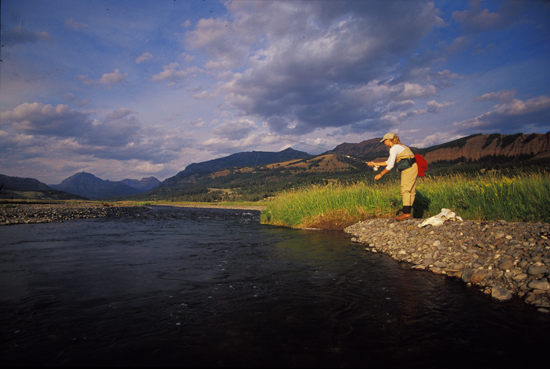
Depth changes. Knowing the contours of a river bottom can help you catch more fish. When the water is low and clear, pay attention to the potholes, depressions, and gravel bars that form the terrain of the river bottom.
When the water is higher or off-color, you can use this information to catch fish lying in the deeper spots, feeding on food items passing overhead. Remember that the water on top of the river travels much faster than the water on the bottom, and the water in depressions along the bottom can be nearly motionless, while faster water rushes past overhead.

深さの変化:川底の等高線を知っていると、よりたくさんの魚を釣ることができる。水位が低く水質がクリアなときは、川底の地形を形成する穴、窪み、砂利の洲にもっと注意を払え。水位が高く濁っているときは、深場のスポットにいる魚は頭上を流れていく餌を取っている魚を釣るために、この情報を使うことができる。川の表面の水は、川底の水より速く移動していて、速い流れが頭上を過ぎて行っている間でも窪みの水はほとんど移動しない。

Riffles.  Fish in the riffles are hungry. They aren’t there to rest or avoid predators, they are there to feed, and because food drifts past quickly, they have little time to inspect and consider your fly when it drifts past them. Relative to fish in flat, slow water, trout and bass in the riffles are easy to catch. In the riffles, use large, heavily hackled and/or foam dry flies that are extremely buoyant and easy for the trout to pick out and attack.

The bumpy water on the surface of the riffle is caused by numerous rocks and gravel undulations along the bottom. While riffle water might seem fast, obstructions create a slow zone on the bottom. If you are using nymphs, make sure you use enough weight—usually split-shot—to sink the flies quickly and drift them slowly along the river bottom. Your flies should travel slower than the surface currents, therefore your indicator—if you are using one—should actually appear to be dragging to indicate that your nymphs are moving slowly.

When streamer fishing, the turbulence of the water adds all the movement you need. Because of the erratic current in a riffle, trout sometimes have trouble tracking and eating the fly, and may not bother to chase a food item that appears to be swimming too quickly or strongly. Move the fly slowly (from your vantage point) and keep a tight line so that you don’t miss the strike.

早瀬:早瀬の魚は腹を空かせている。彼らは休んだり捕食者から逃げるためにそこにいるわけではない。餌を取るためにそこにいるのだ。餌が魚の前を素速く過ぎると彼らにはそれを調べる時間が無いのだ。餌が鱒の前を過ぎていくとき、フライを検討せよ。フラットでゆっくりした流れで釣ることに比べ、早瀬の鱒やバスは良く釣れる。早瀬では、鱒が簡単に見つけてアタックできる、大型の重いハックルか、フォームのドライ・フライを使え。
 早瀬表面のデコボコの水面は川底のたくさんの岩と起伏のある砂利によって生まれる。早瀬は流れが速いように見えるけど、障害物が川底にゆっくりした箇所を作っている。もしニンフを使うなら、川底にフライを素速く沈めて、ゆっくりドリフトさせるために、十分なオモリ(通常スプリット・ショット)を使え。フライは表面の流れよりもゆっくり漂う。それで、インディケータは、ニンフがゆっくり移動することを示すように、実際はドラッグして見える。
 ストリーマーの釣りでは川の乱れた流れは必要なすべての動きを加える。早瀬のこの不規則な流れにのために、鱒はときどきフライを追ったり、喰うときに問題になる。そして素速く、強く泳いでいそうな餌を追うことに困らない。君の立ち位置からフライをゆっくり動かして、アタリを逃さないように、ラインをタイトに維持せよ。